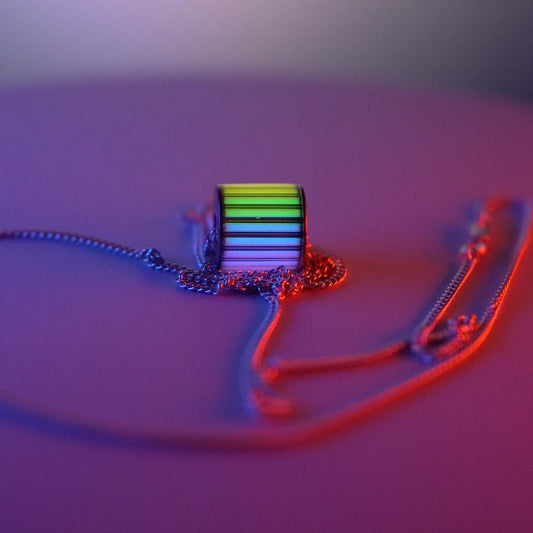
Antique Opal Jewelry Changes Color and Requires Gentle Care
Antique Opal Jewelry Changes Color and Requires Gentle Care
Many older opals were cut as rounded cabochons rather than faceted stones. Their surfaces are smooth and domed, with the color sitting inside the stone instead of breaking into the sharp, regular sparkle of a diamond. In a pendant resting near the collarbone, that can make the opal look almost like a small piece of changing sky. In earrings, the effect is more fleeting. They catch color as the wearer turns their head, then settle back into a subdued white, gray, or bluish body tone.
The metal around the stone changes the impression considerably. Yellow gold can bring out the warmer colors in an opal and make an old piece feel especially grounded. Silver or platinum gives a paler, cooler setting in which blue and green flashes may seem more pronounced. Antique mounts often have softer edges than newly made jewelry. Prongs may be slightly rounded from age, engraved details may have lost some of their crispness, and the finish can carry a muted surface warmth that does not come from polishing. That slight dullness is often what keeps an opal piece from looking overly arranged.
There is a physical delicacy to these pieces that becomes obvious in use. Opal is not as hard as sapphire, ruby, or diamond, and its polished surface can pick up scratches. A ring worn while opening drawers, washing dishes, or reaching into a bag will experience far more contact than an opal pendant. Older settings deserve attention too. A thin prong, a loose hinge, or a clasp that no longer snaps firmly can matter more than a small mark on the metal. Earrings and necklaces usually offer an easier way to wear antique opal regularly, especially for someone who likes the stone’s presence but does not want to protect a ring from every ordinary task.
That does not mean an antique opal has to be treated like a museum object. Part of its appeal is seeing it settle into a person’s actual wardrobe. A small pendant can sit between the collarbone and the neckline of a plain sweater without looking precious or overplanned. Opal drop earrings move enough to show their color, but they tend to remain softer than highly faceted stones. A low-profile ring can work with a wedding band or a plain gold band, although the combination usually looks better when the pieces are allowed a little space rather than stacked into a complete composition.
The most interesting antique examples often show the habits of their previous life. A gold surface may be polished on the high points and darker in the recessed work. The back of a pendant can have tiny marks from years of contact with clothing. A clasp may feel more substantial than its size suggests, or slightly stiff from disuse. None of this automatically proves quality or age, but it gives the piece a physical history that new jewelry generally lacks. I find that these details become visible only after wearing something repeatedly. At first, the opal gets all the attention. Later, the way the chain falls or the way the setting has softened starts to matter just as much.
Opal also carries a particular kind of sentiment because its appearance is so responsive. An antique garnet may keep its deep red presence in nearly any light. An opal changes with the room, the weather, the color of a shirt, and the angle of a wrist. That makes it a natural choice for jewelry connected to memory, though not necessarily in an overtly sentimental way. A pendant inherited from a relative may look different at a family dinner than it did in an old photograph. A ring bought to mark a move, a birthday, or a new stage of life can acquire its meaning slowly, through the repeated act of reaching for it.
There are also old opals that have become fragile in ways a casual glance will not reveal. Some antique pieces use thin stones, foil-backed construction, or settings that leave the gem exposed. Others may have developed fine surface lines, a cloudy area, or a weakened mount. A piece can still be beautiful with these signs, but they affect how comfortably it can enter daily rotation. The appeal is not in pretending age has had no effect. It is in recognizing what kind of wear the jewelry can reasonably handle.
That balance keeps antique opal jewelry interesting. It asks to be noticed, but not constantly fussed over. It can look ornate in a velvet box and quite natural with a cotton shirt, depending on the scale and the setting. I have seen a modest opal ring become most convincing after it stopped being saved for special occasions, when its flashes appeared during ordinary gestures: lifting a coffee cup, turning a key, smoothing a sleeve. The stone did not become less unusual through familiarity. It simply found its place in a life.