Artisan Jewelry in the USA: The Importance of Texture, Movement, and Fit
Artisan Jewelry in the USA: The Importance of Texture, Movement, and Fit
That is part of the appeal of artisan jewelry in the USA. The work tends to leave room for a person’s eye to stay with it. Instead of presenting a flawless surface from every angle, a piece may show how it was formed, joined, polished, or deliberately left alone. Texture does practical work here. Brushed silver softens bright reflections. A darkened recess makes a raised pattern easier to read. Gold with a satin finish can look quietly warm in daylight, while a high polish flashes more sharply with every gesture.
The difference is especially noticeable in jewelry worn close to the face. A pair of handmade earrings does not need to be large to be visible. A slightly uneven disc or a small stone set off-center can change expression as it moves. The earring swings when someone turns to listen, then settles against the neck. That movement often matters more than the design looks like in a still photograph. Weight matters too. A pair that feels substantial without pulling at the lobe usually stays in rotation longer than something visually impressive but tiring by lunchtime.
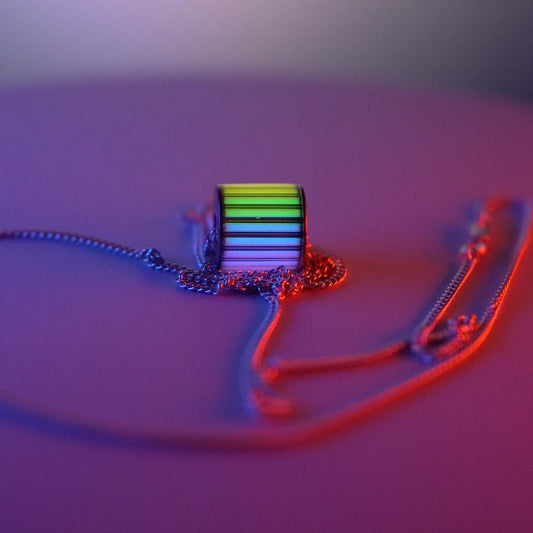
Necklaces show another kind of judgment. A pendant can look beautiful on a table and sit awkwardly once it reaches the body. The chain may twist near the clasp, or the pendant may land too high against the throat or disappear into a shirt. The best pieces seem to find a natural resting place near the collarbone. Their movement is limited but not stiff. A textured surface picks up light as the wearer walks, while a smooth stone gives a quieter, more stable point of focus. Layering can work with artisan pieces, though it usually looks better when the lengths are allowed to overlap casually rather than arranged with perfect spacing.
Material character becomes clearer with ordinary use. Sterling silver develops a softer, less mirrorlike surface where it rubs against skin, clothing, or another ring. Polished gold may keep its color while gathering fine scratches that become visible only when the hand is held near a window. Brass and bronze can change more noticeably, especially in warm weather, and that shift may appeal to someone who likes jewelry to show time rather than resist it. Gemstones vary in the same way. A translucent stone with cloudy inclusions can have more presence than a cleaner, brighter one because its color changes as the light moves through it.
Craftsmanship is not simply the absence of mistakes. It is also the way a piece handles the points where it has to function. A ring should not have an edge that catches on a sweater. The back of a pendant should sit comfortably against the skin. A clasp should close with enough resistance to feel dependable without becoming difficult to operate. On earrings, the post and backing deserve as much attention as the visible front. These are small matters until they fail. Then the jewelry becomes something to remember to wear instead of something a person reaches for without thinking.
There is also a difference between jewelry that looks handmade and jewelry that feels considered. A deliberately uneven surface has rhythm. Random roughness can feel unfinished, particularly around a setting or clasp. In a well-resolved piece, the handwork supports the form. A stone is held securely without being buried. A pattern continues around the band, even if it changes slightly as it goes. The piece does not need to announce its making. Its balance becomes apparent through use.
People often find artisan jewelry while marking a change in their lives, but the meaning usually settles in later. A small pendant bought during a trip may become part of a weekday uniform. A pair of earrings received for a birthday may eventually be worn with a faded sweater and old jeans, far from the occasion that introduced them. Jewelry gains significance through repetition. The ring worn while typing, driving, cooking, and reaching for a door carries a different kind of familiarity than a piece kept for formal events.
That may be why certain handmade pieces remain appealing even as personal style shifts. They are not tied too tightly to a single outfit or moment. A simple form with visible texture can sit beside a watch, a wedding band, or another necklace without looking overly arranged. It may collect scratches, lose some of its original brightness, or acquire a darker edge in the recesses. Held in the hand a year later, it often looks less like a new object and more like something that has found its place.