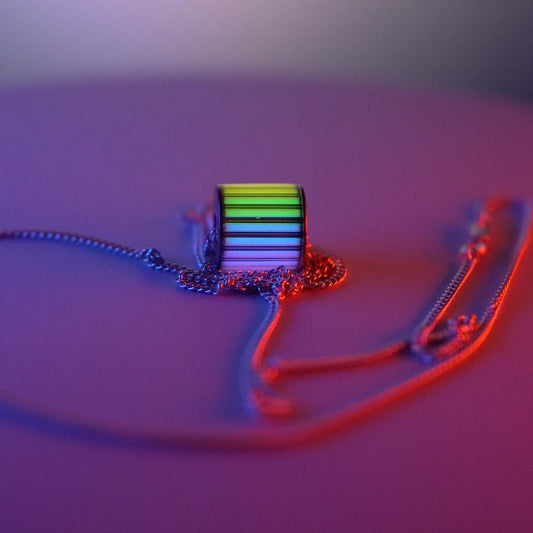
Choosing a Unique Choker Necklace for Style and Comfort
Choosing a Unique Choker Necklace for Style and Comfort
The best designs tend to have some tension in them. They may be clean in outline but irregular in surface, or delicate in scale with one unexpected detail: a curved pendant that follows the hollow of the neck, a hand-hammered finish, an off-center stone, or links that are not quite identical. That kind of difference is easier to live with than decoration piled on for its own sake. From across a room, the necklace may look simple. Up close, the eye finds the uneven edge, the slight variation in metal tone, or the way a stone has been set so its surface catches light only when the wearer moves.
Fit matters more with a choker than many people expect. A necklace that is too loose can lose its visual purpose and drift into ordinary collar-length territory. One that is too tight becomes something the wearer keeps noticing, especially while talking, eating, or looking down at a phone. The comfortable point is usually not rigidly fixed. Skin, posture, hair, and clothing all change how the piece feels. A choker that rests lightly against the neck can look composed with an open shirt, then almost disappear into a high crewneck. A velvet or textile style may feel soft at first but catch lint and makeup along the edges. Polished metal shows fingerprints and small scratches more readily, while brushed or oxidized finishes often become easier to live with as they pick up the marks of regular wear.
The clasp deserves attention because it is close to the back of the neck, where fastening by feel is already awkward. A tiny spring ring may be secure but frustrating. A flat hook, magnetic closure, or adjustable chain can make the difference between reaching for a necklace and leaving it in a drawer. Even the chain extensions affect how the piece sits. If they are too long, they may show beside the clasp or tickle the neck. If they are thoughtfully proportioned, they allow the wearer to change the position slightly depending on the neckline without making the necklace look unfinished.
Material gives a choker much of its personality. Silver with a high polish has a cool, sharp brightness that can make a plain black shirt look more deliberate, though it will show fine surface wear quickly. Yellow gold, especially in a softer satin finish, tends to blend with warm skin and gives a piece a quieter presence. Gold-filled or plated surfaces can work well for occasional wear, but the areas that rub against skin, clothing, or a clasp usually reveal wear first. That is not necessarily a flaw. A necklace with a changing surface can become more individual over time, though flaking or uneven loss of color is different from a graceful patina.
Gemstones change the mood without requiring a large pendant. A small black stone can make a narrow choker feel graphic. Moonstone, opal, or pale quartz will behave differently, showing a soft internal glow rather than a hard metallic reflection. Beads bring another kind of movement. They can click faintly against one another, sit with slight irregularity, and make the necklace feel less architectural. I tend to prefer stones with visible variation over perfectly matched ones. A tiny inclusion or difference in color gives the eye something to return to, particularly at close range.
There is also a social quality to chokers that is easy to miss in product photographs. They have appeared in many different forms, from simple ribbons and cords to metal collars and finely worked chains. Because the silhouette is so recognizable, a new version can carry a hint of those associations without being tied to one particular era. The wearer’s styling does more to define it than the category itself. A thin sculptural choker with a linen shirt can feel restrained. The same necklace with a slip dress and layered chains becomes more deliberate, though layering works best when the other necklaces leave it room to breathe. Too many close, competing lines around the neck can make the whole arrangement look fixed in place rather than worn.
As a gift, a choker can be surprisingly personal because fit is part of the design. It helps to know whether the recipient usually wears open necklines, short chains, or earrings that already draw attention upward. A necklace that sits at the collarbone may be more useful than one designed to hug the throat, especially for someone who dislikes anything touching the neck. That practical detail says more than a generic idea of what should suit them.
Some chokers remain in rotation because they are easy to recognize without being difficult to wear. They become associated with a particular jacket, a certain haircut, or the habit of dressing for dinner even when dinner is ordinary. After enough use, the metal may lose its first brightness and the clasp may acquire tiny scratches. The necklace can look less pristine and more settled, which is often when its character becomes clearest.