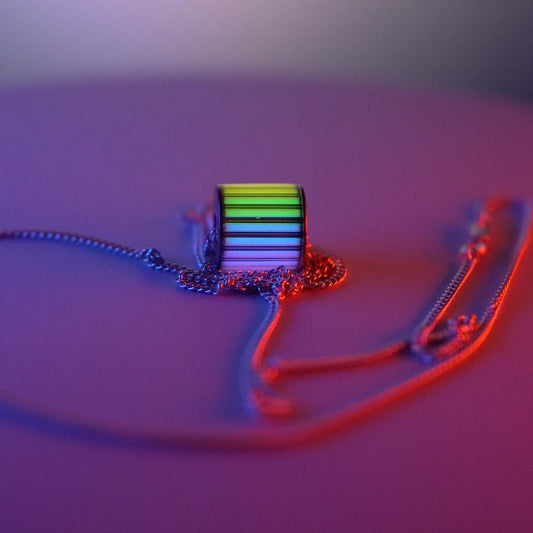
Choosing a Unique Long Necklace That Moves and Wears Well
Choosing a Unique Long Necklace That Moves and Wears Well
The best unique long necklaces usually have some tension in their design. They may combine a fine chain with a heavy object, or a polished surface with something visibly rough. A warm brass or gold tone can make dark clothing feel less severe, while oxidized silver has a quieter, cooler presence against cream, denim, or faded black. The contrast is part of the appeal. A necklace made entirely of matching, highly polished elements can look finished in a display case but strangely anonymous once worn.
Length matters more than people sometimes expect. A necklace that lands just below the sternum has a different character from one that reaches the top of the waist. The shorter long necklace tends to stay visible over an open shirt or a simple knit. A deeper pendant may rest against the fabric instead of the skin, which changes how it catches light and how much it moves. Very long styles can be graceful, but they also need enough weight to hang properly. If the chain is too light for the pendant, it twists or rides up. If every part is heavy, the piece can become tiring before the day is over.
This is where construction shows itself in ordinary use. A clasp that is difficult to fasten becomes irritating when the necklace is worn often. Thin chain links can catch on a loose sweater thread. A pendant with a flat back may sit calmly against clothing, while a three-dimensional form turns from side to side and shows its edges. None of these details are dramatic on their own, but they determine whether a piece remains in the jewelry box or becomes the one someone reaches for without thinking.
Long necklaces are especially good at making layering look unplanned. A small pendant near the collarbone, a medium-length chain, and one longer textured piece can work together if their lines remain distinct. The arrangement begins to look forced when every necklace has the same shine, the same scale, or a pendant competing for the exact same spot. A long strand of dark beads can give space to a delicate gold chain. A sculptural silver pendant may need to stand alone, especially over a plain shirt where its outline can be seen clearly.
Materials also change with this kind of wear. A smooth gold-filled chain may develop a softer, less mirror-like surface from rubbing against fabric. Silver can darken in its recessed areas, which often makes engraved or hammered details easier to see. Leather may become more flexible and slightly darker where it meets the neck, while natural stones reveal small differences in translucency as they turn. Those changes are not always signs that a piece has deteriorated. Often they are what make it look settled into someone’s life rather than newly chosen for a single outfit.
There is a practical reason long necklaces work well as gifts, too. They are less dependent on an exact neck size than a close-fitting chain, and their character can come from a symbol, material, or shape without requiring a very specific personal style. Still, the most successful gift is rarely the loudest one. A simple pendant with a strange silhouette, a strand of small uneven stones, or a locket with a slightly worn finish can feel more considered than an elaborate piece chosen for immediate impact. The recipient can wear it over a button-down, a dress, or a sweatshirt and gradually make it their own.
Some long necklaces carry a sense of place or memory without looking overtly sentimental. A piece with a coin-like pendant might recall travel, even when it was not bought abroad. A length of amber, shell, wood, or carved stone can bring a different texture to an otherwise metal-heavy collection. Older-looking surfaces are often appealing for this reason. They suggest handling and time, though the necklace itself may be new. There is something comfortable about wearing an object that does not seem to demand pristine care.
What keeps a distinctive necklace in rotation is usually not novelty alone. It has to fall well, feel reasonable after several hours, and offer something to notice without requiring attention. I have seen the same long pendant look almost architectural over a black sweater, then surprisingly casual over a faded T-shirt. That changeability is easy to miss in a photograph. In daily life, it is often the difference between a piece that was interesting once and one that quietly becomes part of how someone dresses.