Handmade Chain Designs: How Link Shape and Movement Change the Look
Handmade Chain Designs: How Link Shape and Movement Change the Look
That irregularity is part of the appeal, though it is not the same as sloppiness. Good handmade chain designs have control behind the looseness. The links are shaped to move without snagging, the connections are secure, and the chain lies in a way that feels intentional. A necklace may settle into a shallow curve beneath the throat instead of forming a rigid semicircle. A bracelet may roll gently over the wrist, making a soft, occasional sound against a watch or another bracelet. These details are easy to miss in a jewelry case and obvious after several hours of wearing the piece.
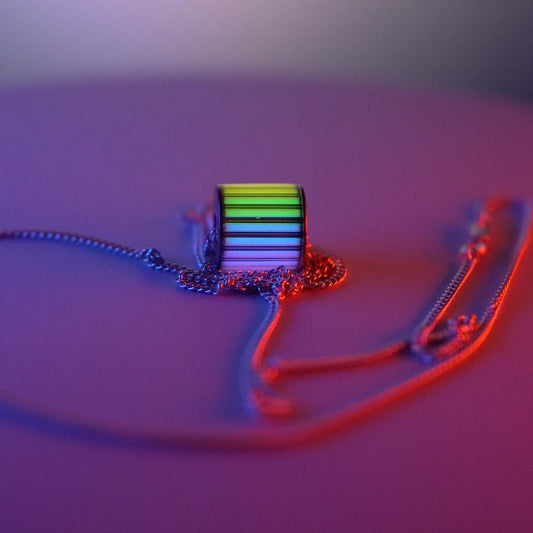
The link itself does much of the visual work. Small oval links create a fine, almost fabric-like surface, especially in polished gold or silver. Heavier round links show more space between them and tend to look better when allowed to move freely rather than crowded with charms. Flat links reflect light in flashes as the wearer walks, while textured or hammered links break that reflection into duller, uneven glints. The difference is especially noticeable in ordinary gestures. A chain bracelet can disappear against a sleeve until the hand reaches for a coffee cup, then suddenly show a narrow line of brightness along the wrist.
Handmade work becomes most interesting where the surface is not entirely uniform. A brushed finish may soften the color of silver and make it easier to wear every day, while polished edges still catch the light. Warm gold tones can look nearly buttery beside skin, but a darker oxidized finish may bring out the spaces between links and give a delicate chain a little more visual weight. With regular use, polished areas develop fine scratches. On silver, the recessed portions may darken before the raised surfaces do. That gradual contrast often makes the chain look more settled rather than worn out.
Weight matters more than people sometimes expect. A substantial chain necklace can feel reassuring at first and tiring by late afternoon, particularly if the links are stiff or the clasp presses against the back of the neck. A lighter chain may be comfortable enough to sleep in, although any chain worn constantly will eventually encounter hair, clothing, skin oils, and the occasional tug. The quality of the clasp matters in these unglamorous moments. A secure lobster clasp or a thoughtfully made hook is not the most visible feature of a piece, but it determines whether the necklace becomes part of a daily routine or stays in a drawer because the wearer does not trust it.
The best handmade chain designs usually have some tolerance for being worn with other things. A fine chain can sit close to the neck while a heavier one rests lower, with enough difference in length that the links do not knot together every time the wearer moves. Mixing finishes can keep layering from looking overly arranged. A matte silver chain beside a brighter gold one has a little friction between them, which can feel more natural than matching every surface. The same is true with pendants. A small, irregular stone on a simple handmade chain often looks at home there, particularly when the chain is not so delicate that the pendant overwhelms it.
There is also a useful difference between handmade chains that emphasize precision and those that emphasize touch. In a tightly formed chain, the craft shows through consistency: evenly spaced links, clean edges, and a clasp that sits flush. In a more tactile design, the attraction may be in the slight flatness of a hammered section or the way each link has its own face. Neither approach needs to look rustic. A carefully finished piece can retain evidence of the hand without turning that evidence into decoration.
Chains carry personal meaning in a quiet way. They are often worn close to the body and tend to become associated with habits: fastening one before leaving the house, feeling it shift under a shirt collar during a long day, touching the clasp while thinking. A handmade chain given for a birthday or milestone may not announce the occasion to anyone else. Its significance can remain private, built up through repetition rather than ceremony.
That may be why chains are often kept after tastes change. A person who stops wearing large earrings or bright rings may still reach for a familiar necklace whose links have softened in appearance and whose weight is known without looking. It has become part of the body’s ordinary movements. A slight twist at the collarbone, a muted flash beside a sleeve, the small sound of links meeting on a tabletop: those are modest pleasures, but they are the ones that keep a piece in rotation.