Inlaid Opal Jewelry Looks and Wears Differently From Solid Opals
Inlaid Opal Jewelry Looks and Wears Differently From Solid Opals
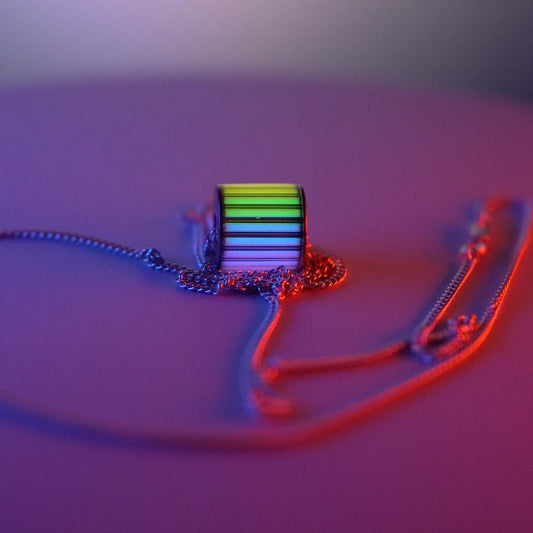
That difference comes from the way inlay is made. Instead of setting one solid opal into a prong or bezel, the opal is fitted into a recessed surface, often as small pieces or a thin layer combined with a backing material. The finished face is usually smooth and level with the metal or surrounding stone. You do not get the rounded cabochon shape or visible edge that gives a traditional opal ring its familiar presence. Inlaid opal tends to sit close to the body, with the color spread out rather than concentrated in one domed stone.
That flatness changes the way it wears. On a ring, it is less likely to catch on a sweater cuff or feel top-heavy on the finger. A narrow inlaid band can sit comfortably beside a wedding ring or another plain band without creating a stack that looks carefully engineered. At the same time, the broad, level surface can show small scratches more plainly, especially in a ring worn every day. The opal itself may be protected by a hard resin or glassy covering, depending on the piece, but the practical question is still how the whole surface is constructed. A ring that looks pristine in a display case can develop a softened, less reflective face after months of contact with desks, pockets, countertops, and everything else hands encounter.
Necklaces and earrings are a little more forgiving. An inlaid opal pendant resting near the collarbone catches light when the wearer turns, rather than only when the piece is directly facing someone. Because the surface is usually thin, the pendant can feel more like a colored mark than a hanging stone, which is part of its appeal. Earrings show a different quality. Small inlaid studs can give off brief sparks as the head moves, while larger drops let the shifting color appear and disappear with the swing. They do not need much size to be noticed.
The character of the opal matters as much as the construction. Some inlaid pieces have a busy mosaic of turquoise, violet, orange, and green, with each fragment producing a slightly different flash. Others are deliberately restrained, showing a milky field with only a narrow blue flare near the edge. A dark backing can make the color look more dramatic, while a pale backing often gives the piece a softer, more worn-in appearance. Neither is automatically better. The more interesting examples usually have some visual unevenness. If every section looks identical, the surface can feel printed rather than mineral.
Metal changes that impression too. Yellow gold or warm brass brings out the amber, peach, and green notes that sometimes appear in opal, giving the jewelry an earthy, almost antique warmth. Silver, white gold, and steel make blue and violet flashes look sharper and cooler. A satin finish around the inlay can keep the piece from becoming overly bright, while a highly polished border draws attention to the contrast between the reflective metal and the shifting stone. These are small decisions, but they determine whether the jewelry feels quiet, southwestern, modern, or slightly otherworldly without needing an elaborate design.
Inlaid opal also has a particular relationship with imperfection. Because the material is assembled into a surface, tiny variations in line, fragment size, or color density can remain visible. That irregularity is often what keeps the piece from looking generic. It may not have the concentrated depth of a fine solid opal, but it can have a more graphic presence, almost like a miniature tile or a patch of worn mosaic. I tend to notice these pieces most when they are not trying to imitate a larger gemstone. Their appeal is in the arrangement of color across a small plane.
They are especially easy to give meaning to because the form is so wearable. A pendant can become part of someone’s daily uniform, tucked under an open shirt or resting against a plain sweater. A ring may be chosen for a birthday, a move, or a private milestone, then gradually lose its original occasion as it becomes the ring worn while typing, cooking, or driving. Opal’s changing color makes that familiarity feel less static. The piece looks slightly different under office lighting, late afternoon sun, or the warm light of a restaurant, even though nothing about it has changed.
The jewelry does ask for a little awareness. A smooth inlay may be comfortable and relatively protected, but regular abrasion, harsh cleaners, heat, or a damaged surface can affect its appearance. Rings experience the most punishment simply because hands are always in use. Earrings and pendants usually preserve their finish longer, provided their edges and clasps are sound. With any inlaid piece, the quality is visible in the transitions: whether the opal sits cleanly in its recess, whether the surface feels level rather than lumpy, and whether the metal edge looks deliberate instead of merely covering a gap.
What keeps inlaid opal jewelry in rotation is not that it looks spectacular at every moment. Much of the time it looks like a small, quiet piece of color. Then a wrist turns or a shoulder shifts, and the blue comes through. That intermittent flash is easy to live with. It asks to be noticed rather than demanding attention, which may be why an inlaid opal ring often ends up being worn long after the more obviously impressive pieces have been put away.