Men’s Class Ring Alternatives: Understated Signets for Everyday Wear
Men’s Class Ring Alternatives: Understated Signets for Everyday Wear
The best men’s class ring alternatives tend to keep the personal part while dropping the school-symbol look. A plain signet ring is the clearest example. Its flat surface gives an engraver room for initials, a year, a small mark, or even a private phrase, but from a distance it simply reads as a solid piece of metal. There is no oversized emblem demanding attention. On the hand, a signet usually catches light in brief, quiet flashes when the wearer turns a key or rests his fingers on a steering wheel.
Shape matters more than people expect. A traditional signet has a broad face and tapered shoulders, while a slimmer version may look closer to a wedding band with a flattened top. Rounded edges feel easier for daily wear, especially for someone who works with his hands or is not accustomed to wearing rings. Sharp corners can give a piece a more architectural appearance, but they also find their way into pockets, gloves, and the edge of a desk. The difference becomes obvious after a week, not in the mirror during the first fitting.
Metal changes the character just as much. Yellow gold makes an engraved ring feel established and warm, particularly once the high points begin to soften from contact with other objects. Sterling silver starts brighter and cooler, then develops darker traces in recessed engraving and along the underside. That uneven aging can be attractive because it gives the letters or symbol more definition. Stainless steel and titanium have a cleaner, harder appearance and generally tolerate daily knocks well, though they do not develop the same kind of mellow surface as silver or gold. A polished finish shows fingerprints and scratches quickly. Brushed or satin surfaces are often easier to live with because small marks disappear into the texture rather than sitting on top of it.
A narrow engraved band can serve the same emotional purpose with even less visual weight. Instead of a raised face, the meaning sits around the circumference or along one side. A graduation year, initials, coordinates, or a short date may be visible only to the wearer. This is especially appealing for someone who wants a reminder of a school, team, military service, apprenticeship, or family milestone without wearing an object that resembles formal class jewelry.
The feel of a band is simple but important. A ring that is too thin can look incidental and may twist easily, while one that is too wide can make the finger feel crowded beside a wedding band. A slightly rounded interior, sometimes called a comfort fit, is noticeable during the day because the ring moves over the knuckle without scraping. It matters during ordinary tasks: washing hands, typing, lifting a bag, or sliding a hand into a coat pocket. Jewelry is often judged by these small interruptions rather than by how impressive it looks in a product photograph.
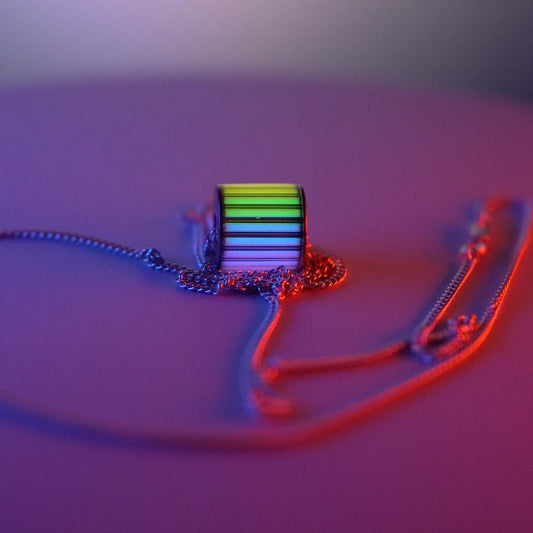
For someone who does not usually wear rings, a pendant can carry the same idea more naturally. A small dog tag, disc, bar, or textured metal pendant can hold an inscription on the back where it remains personal instead of public. Worn beneath an open shirt, it may appear only when the wearer bends forward or when the chain shifts near the collarbone. That partial visibility often feels less ceremonial than a class ring. The piece becomes part of the person’s daily movements rather than a fixed symbol on the hand.
Chain quality is particularly noticeable with pendants. A thin chain that kinks at the neck or has a flimsy clasp will make even a well-made pendant irritating. A slightly heavier curb, cable, or wheat chain tends to lie more steadily, though the right choice depends on the weight of the pendant. The chain should not pull the pendant sharply to one side or disappear behind the collar. Length changes the mood too. A shorter chain keeps the piece close to the collarbone and discreet, while a longer one gives it more movement over a T-shirt or sweater.
Some men choose a bracelet instead, especially if rings feel impractical at work. A simple metal ID bracelet, leather band with a small engraved plate, or narrow chain bracelet can mark a milestone without looking ceremonial. Bracelets are more active than rings. They slide against a watch, tap lightly on a desk, and pick up wear along the clasp and underside. That movement can make the piece feel lived in, but it also exposes weak construction quickly. A clasp that opens with one hand or a leather edge that begins to curl after a few weeks changes the relationship with the jewelry.
The strongest alternatives are not necessarily the ones that resemble a class ring in a smaller form. They work because they leave room for a person’s style to change. A man may wear a signet with a suit one day and with work clothes the next. A pendant can sit under a flannel shirt, then reappear with a plain T-shirt without looking arranged. An engraved band can share a hand with a wedding ring, though the metals do not need to match perfectly. Slight differences in tone can look more natural than a carefully coordinated set.
There is also something useful about keeping the inscription restrained. A full crest or long message may feel important at the moment it is chosen but become visually tiring over time. Initials, a year, a small stone, or an understated symbol often survives changing taste better. The point is not to recreate the ceremony of a class ring. It is to give a familiar memory a form that can keep pace with the rest of a life, including the scuffs, dull spots, and ordinary gestures that eventually make the jewelry feel like it belongs.