Opal Pendant Color Changes Explained—and How to Wear It Every Day
Opal Pendant Color Changes Explained—and How to Wear It Every Day
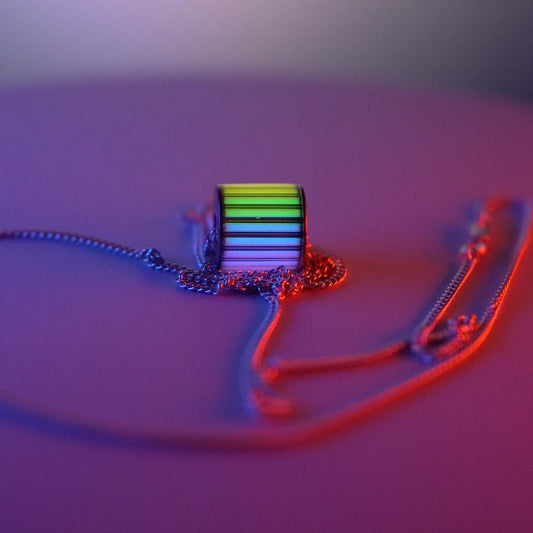
That shifting color is part of what makes opal feel personal. A sapphire or garnet usually presents a more consistent impression from one glance to the next. Opal has moods. Its pattern can look clouded in indoor light and suddenly sharp outdoors, or show mostly blue one day and warmer fire the next depending on the clothing beneath it and the angle of the light. Even a small pendant can hold the eye for a moment without needing a large setting or an elaborate chain.
The shape of the pendant matters more than people sometimes expect. A rounded cabochon has a softer, almost pebble-like presence, especially in yellow gold. Silver or white gold makes the same stone look cooler and can bring out blue and green flashes. A slim bezel gives the opal a clean outline and protects its edges, while prongs leave more of the stone exposed and can make it appear brighter. The difference is noticeable near the collarbone, where a pendant moves slightly as someone walks or reaches for a cup of coffee. A bezel tends to read as a solid little object. A prong-set stone seems more open and light-catching.
Opal also benefits from being worn lower on the body than an earring or ring. It is close enough to notice, but not usually in constant contact with hard surfaces. That makes a pendant one of the more sensible ways to wear opal regularly. Rings take knocks against countertops, door handles, and desk edges. Earrings can catch on hair and clothing. A pendant still needs care, but it generally avoids the most ordinary sources of impact.
It is not an indestructible stone. Opal is softer than many familiar gemstones, and its surface can pick up scratches if it shares a jewelry box with harder stones. Heat and sudden changes in temperature are also unhelpful, particularly for opals with higher water content. A pendant worn often may gather a little skin oil or dust around the setting, which can make the color look duller than it really is. Cleaning with a soft, slightly damp cloth is usually enough. Soaking it, exposing it to harsh cleaners, or leaving it near a heater is unnecessary risk.
The setting and chain deserve attention because a beautiful stone can be let down by the parts that keep it in place. A very light pendant can flip over repeatedly if the bail is poorly balanced, leaving the back facing outward by the end of the day. A thin chain may look delicate at first but feel less reassuring if the pendant has any weight. The clasp is another small detail that becomes important through habit. A secure lobster clasp or well-made spring ring is not visually exciting, but it determines whether the piece becomes something a person reaches for without thinking or something they avoid wearing.
Opal’s surface can also tell you something about how the pendant was made. A natural solid opal has color throughout the stone, though not necessarily in every area. Doublets and triplets use a thin layer of opal attached to another material, sometimes with a dark backing that strengthens the appearance of the color. That construction is not automatically a flaw, and it can make certain looks more accessible, but the edges and back should be treated with care. In a pendant, the stone is less exposed to impact than it would be in a ring, yet moisture and rough handling can still matter depending on the construction.
The most wearable opal pendants are often not the ones with the loudest color. A stone with a restrained blue-green flash can sit comfortably with a cotton shirt, a knit sweater, or a black dress without making the outfit feel arranged around it. Larger, highly colorful opals have their place, especially for an evening event, but smaller stones tend to settle into daily life. They become familiar in the way a watch or a favorite pair of earrings does. A person may stop consciously noticing the pendant until sunlight finds it while they are driving or leaning over a table.
Layering is possible, though opal usually looks better with some breathing room. A short chain with a small opal can sit above a longer plain pendant, but several bright stones competing at the same height can make the neck look busy. Opal works particularly well alongside simple metal, a fine chain, or another pendant with a quiet shape. The color does enough on its own. Adding too much texture around it can flatten the small changes that make the stone interesting.
There is also a reason opal pendants often become tied to a particular period in someone’s life. The stone does not have a single fixed color, so it can continue to look different as clothing, hair, and personal style change. A pendant bought for a birthday or a transition may later be worn with entirely different things than the giver or wearer imagined. Its meaning stays, but its visual role shifts. It can look delicate at one point, slightly eccentric at another, and eventually just familiar.
That familiarity is perhaps where an opal pendant earns its place. Not through constant brilliance, and not by looking exactly the same every time, but through those brief changes that appear during ordinary movement. A small flare of color near the collarbone can be enough to keep someone wearing it for years.