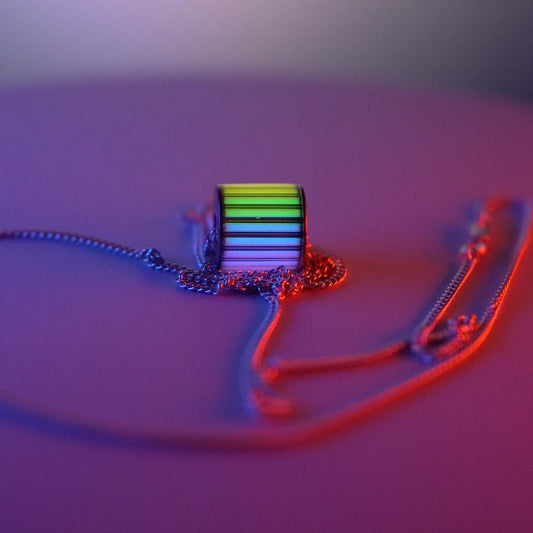
Opalite Crystal Necklaces Look Different in Every Type of Light
Opalite Crystal Necklaces Look Different in Every Type of Light
That shifting color is a large part of the appeal. Opalite is generally a man-made glass rather than natural opal, and that distinction matters less to its visual character than to the way people talk about it. It has a smooth, even translucence, often with fewer of the irregular marks found in natural stones. In a necklace, that consistency can be attractive. A polished teardrop or rounded pendant looks clean against the collarbone, especially when the setting leaves enough of the surface exposed for light to pass through it.
The best versions tend to have a little restraint around them. Silver-colored metal emphasizes the cool blue cast, while warm gold or brass can bring out the creamy and peach tones. A thin chain lets the stone remain the focus, though not every delicate chain is comfortable in practice. Very fine links can twist easily, and a small clasp becomes irritating if the necklace is meant to be worn often. A slightly sturdier chain usually sits better and gives the pendant enough weight to settle instead of turning sideways every few minutes.
Length changes the impression more than people expect. A short necklace places the stone directly in the shifting area above the sternum, where it catches light from a window, a phone screen, or a restaurant fixture. A longer chain allows the pendant to move over a sweater or blouse, and the flashes become intermittent as it turns. That movement can be lovely, but a light pendant on a long chain may slide beneath a collar or disappear into loose fabric. Opalite tends to work best when its surface is visible rather than constantly covered.
Its softness of color also makes it easy to wear with other jewelry without looking overly arranged. A small opalite pendant can sit beside a plain gold chain or a narrow silver necklace, particularly if the neighboring pieces have different lengths. Layering becomes less successful when several translucent or highly polished pieces compete for the same light. The stone already has a changing presence. It does not need much help.
There is a practical side to its glass character. Opalite does not have the same hardness or value as natural gemstone materials, but it is not fragile in the way a sharply pointed crystal might suggest. It can still pick up scratches, chips, or dull marks if it is worn against metal pendants, tossed into a jewelry dish with rings, or exposed repeatedly to perfume and hair products. Wiping it with a soft cloth after wear is usually enough. The chain and clasp deserve just as much attention as the stone, since skin oils and moisture can affect plated finishes long before the pendant itself looks worn.
That gradual wear can change how the necklace feels in a person’s rotation. A piece with a bright, mirror-like finish may look especially appealing at first but show surface marks quickly. A satin-finished chain or a simple bezel setting can be more forgiving. Prongs create a lighter, more open look, though they need occasional checking because a loose setting is an avoidable way to lose a stone. A bezel gives the pendant a cleaner outline and protects the edges, but it can also make the piece feel more modern and deliberate.
Opalite is often chosen for its association with calm, intuition, or gentle change. Those meanings are personal rather than fixed, and the necklace does not need to carry a grand story to become significant. Sometimes it is the piece someone reaches for during a period of changing habits, a new job, a move, or simply a shift toward softer colors in their wardrobe. Its pale surface suits that kind of quiet symbolism. It can feel intentional without announcing that it is meant to be meaningful.
As a gift, the necklace has an approachable quality, but the setting still matters. A very small pendant may be sweet on someone who prefers understated jewelry and easy everyday pieces. A larger crystal can feel more distinctive, although its proportions should make sense for the wearer. Held against the chest, a pendant that looked substantial in a box may turn out to be visually lost under a crewneck. Conversely, a broad, bright stone can dominate a petite frame or feel too decorative for someone who usually wears only fine chains.
What keeps an opalite crystal necklace in regular use is usually not its resemblance to a precious stone. It is the way it changes without demanding attention. The necklace can look nearly white in a hallway mirror, then show a blue rim while someone reaches for a coffee cup. On a cloudy afternoon, it may lose its flash and become a smooth, subdued shape against the skin. That inconsistency is part of its character. A piece that looked exactly the same in every light would be easier to understand, but probably less interesting to keep wearing.