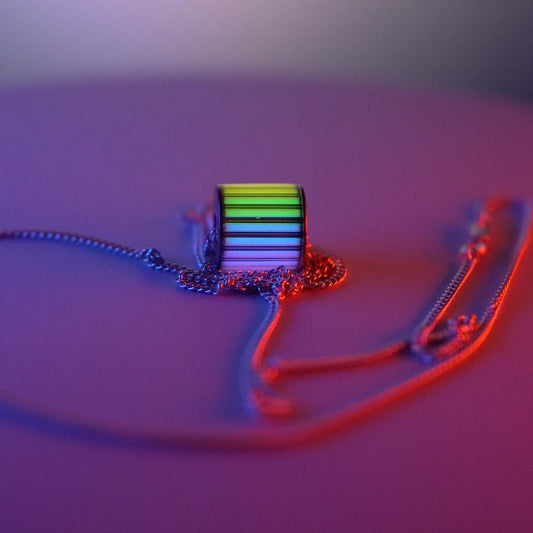
Rare Earth Rings What People Think They Are vs What They Actually Are
Rare Earth Rings What People Think They Are vs What They Actually Are
A few months ago, a customer emailed me asking if we carried “real rare earth rings.” I had to pause before answering, because that phrase means very different things depending on who’s saying it. Some people picture glowing minerals pulled from some secret mine. Others think it’s a fancy way of saying “unusual metal.” In the U.S. jewelry market, the term gets used loosely, and not always accurately.
Technically, “rare earth” refers to a group of metallic elements like neodymium, lanthanum, and cerium. They’re critical in electronics, magnets, batteries, and military tech. They are not, generally speaking, used to make rings you’d want to wear every day. Most rare earth elements oxidize easily or are too reactive or soft to hold up as jewelry. So when I see a ring advertised as “rare earth,” my first reaction isn’t excitement — it’s curiosity. What exactly are we talking about here?
In many cases, what sellers mean is that the ring contains a material associated with rare earth minerals, or that the design includes magnetic properties using rare earth magnets. I’ve handled a few of those magnetic rings over the years. They tend to spark interest from people who like the idea of hidden function — a ring that clicks together, spins, or interacts with another piece. It’s a novelty angle, and for some buyers, that’s the whole appeal. But magnets and daily wear don’t always get along. Strong rare earth magnets can chip, corrode, or lose strength if not sealed properly. And if the magnet is encased in a standard metal band, then really, the magnet is the feature — not the structure.
Other times, “rare earth ring” is shorthand for alternative metals that sound industrial or futuristic. I’ve seen the term loosely attached to rings made from materials like tantalum or even meteorite inlays. Tantalum isn’t a rare earth element, but it has that deep gray-blue tone that feels different from traditional gold or platinum. It’s dense, understated, and has a quiet weight to it that some men especially seem drawn to. Meteorite rings, on the other hand, trade on the idea of rarity in a cosmic sense — material that’s literally older than the planet. That emotional hook matters. People don’t just want something uncommon; they want something with a story that feels bigger than standard jewelry counter fare.
There’s also a subtle psychological piece here. In the U.S., buyers have grown skeptical of the word “luxury.” It’s overused. But “rare” still has power. It suggests scarcity without screaming status. A rare earth ring, at least in theory, sounds like something few others would have. I’ve noticed that shoppers looking for these pieces are often the same ones who don’t want a traditional diamond solitaire or a plain gold wedding band. They want something that signals independence, maybe even a bit of contrarian taste. Not flashy — just different.
That said, I always think it’s worth asking what kind of “rare” you’re actually paying for. Is the material genuinely difficult to source? Is it durable enough for decades of wear? Or is the rarity mostly a marketing layer wrapped around fairly standard construction? I’m not against creative naming — jewelry has always thrived on romance and storytelling — but I prefer when the material itself can stand on its own without too much explanation.
Personally, I’m drawn less to the technical classification of rare earth elements and more to the tactile experience of a ring. How does it feel when you tap it against a table? Does it scratch easily? Does it warm up against your skin, or stay cool and distant? Those details end up mattering far more than whether the metal sits on a periodic table labeled “rare.”
If you’re considering one, I’d focus less on the label and more on the build quality and the reason you’re attracted to it in the first place. Sometimes “rare earth” really means cutting-edge materials science. Sometimes it just means someone found a new way to describe something unconventional. Either way, the ring still has to survive your daily life — coffee cups, steering wheels, gym bags, nervous fidgeting during meetings. That’s where the real test of rarity shows up, quietly, over time.