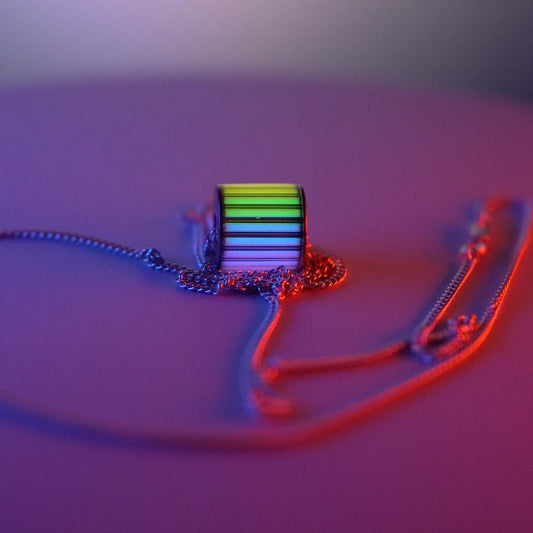
The reason an opal jewelry set glows differently with light and movement
The reason an opal jewelry set glows differently with light and movement
That’s part of why opal jewelry sets feel different from other matched pieces. A lot of sets are designed to look coordinated at a glance, almost uniform. With opal, even when the stones are cut to match, they never behave exactly the same. One earring might flash more green, the pendant might lean warmer with hints of orange, and the ring, if there is one, often ends up being the moodiest of the group. You get this quiet variation across pieces that technically belong together, but don’t feel identical.
The metal matters more than people expect. In yellow gold, opals tend to look warmer and a little softer, almost like the color is coming from underneath a thin layer of honey. In sterling silver or white gold, the same stones can look sharper, with more contrast in the flashes. You notice it especially in a set because the repetition makes the differences clearer. A pale opal in a bright white setting can look almost glassy in low light, then suddenly show electric blues when you step outside. The same stone in a warmer setting reads more subdued indoors but glows in a way that feels closer to skin tone.
Wearing a full set is also more about spacing than people realize. A pendant usually sits right at that point where your collarbone dips, and with opal, that placement matters because it picks up whatever light is hitting your chest and neck. If the chain is slightly longer, the stone moves more and you get more of that flicker. Earrings, especially small studs or short drops, respond to head movement, so the color shows in quick flashes rather than a steady shine. Together, they don’t overwhelm unless the stones are large. They sort of take turns being visible.
There’s also the question of how often someone actually wears all the pieces together. In real life, sets tend to break apart. The earrings get the most use because they’re easy and don’t require much thought. The necklace comes out when the neckline makes space for it. Rings, if included, depend on comfort and habit. Opal rings in particular can feel a little more delicate, so people are more aware of them during the day. You’ll see someone absentmindedly rotate the ring, catching a glimpse of color as they do something ordinary like reaching for a coffee cup.
Over time, you start to notice small changes. Not in the opal itself so much as in how it sits in its setting. Prongs can soften slightly with wear, chains pick up tiny kinks that only the wearer can feel, and the surface of the metal develops that faint, uneven sheen that comes from being handled often. Opals don’t have the hard, unchanging look of stones like sapphire or diamond, so they seem to age alongside those small shifts. The set starts to feel less like a matched purchase and more like a group of pieces that have settled into someone’s routine at different speeds.
What sticks with people is rarely the idea of the set as a complete thing. It’s usually a specific moment of color. A flash of green in a dim restaurant, a milky blue that shows up in morning light, a hint of pink that only appears when you tilt your wrist just right. The fact that those moments can happen in three places at once, ears, neck, hand, is what makes an opal set feel a little more alive than most.