The Role of Metal and Settings in the Look of Handmade Opal Jewelry
The Role of Metal and Settings in the Look of Handmade Opal Jewelry
That quality suits handmade work. A hand-shaped setting often leaves more room for the stone’s individual outline instead of forcing every opal into a perfectly matched oval or round. You may see a slightly uneven cabochon, a dark line in the stone, or a patch where the color gathers more strongly on one side. Those details can make the piece feel less like an arrangement of standard parts and more like a study built around one particular piece of material.
The metal changes the mood considerably. Warm gold tones bring out the opal’s peach, yellow, and reddish flashes, even when those colors are only occasional. Sterling silver and white metals make blue and green appear sharper, especially in a simple bezel with a clean edge. Oxidized silver can be effective with a darker opal because the contrast gives the stone a quiet, almost smoky setting. A highly polished finish catches plenty of attention, but a brushed or lightly textured surface tends to let the color movement remain the most interesting thing.
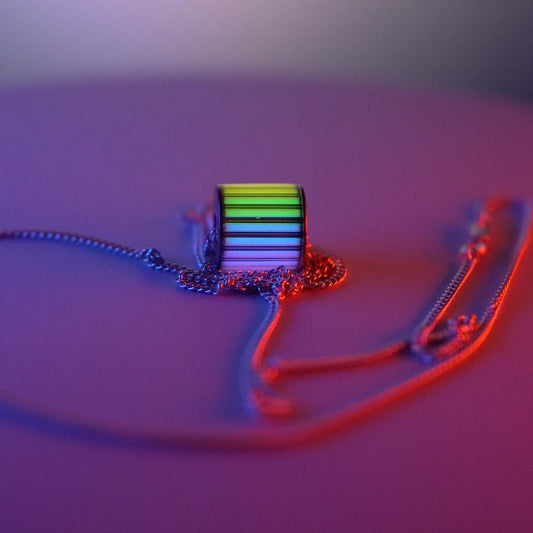
I notice the difference most with pendants. A small opal resting near the collarbone does not need a large frame. In fact, an oversized setting can make the piece feel heavy and interfere with the stone’s softer character. A slim bezel or a few restrained prongs usually works better, particularly if the pendant is meant to be worn with an open shirt or a fine chain. As the necklace shifts during the day, the opal gives off brief sparks rather than a constant shine. It can sit easily beside a small gold charm or another thin chain without looking like the layers were assembled for a photograph.
Earrings show another side of the material. Opal studs can be subtle, but their color becomes visible when the head turns or hair moves away from the ear. Drop earrings are more expressive, though weight matters quickly. A large stone in a heavy handmade mount may look beautiful for ten minutes and feel irritating by the end of dinner. Lightweight settings, secure backs, and a balanced connection between the stone and ear wire matter more here than elaborate detail. The best pair often has enough movement to wake up the color without pulling the lobe downward.
Rings ask for more caution. Opal is not as hard or carefree as many stones people wear every day, and its surface can show scratches or dulling if it meets rough work, hard countertops, or a pocket full of keys. Some opals are also more sensitive to sudden changes in temperature and moisture than others. That does not make them too delicate to wear, but it does make a ring a more deliberate choice than a pendant. A low-set cabochon with a protective bezel tends to be easier to live with than a high, exposed stone. It is the kind of ring that may come off for gardening, cleaning, or moving furniture, then return to the hand for ordinary errands and dinner.
Handmade construction makes small functional details easier to appreciate. The underside of a pendant should feel finished rather than sharp. A ring should not catch on a sweater. Ear wires need to close securely, and a chain should have a clasp that does not feel like an afterthought. These things are not glamorous, but they determine whether a piece stays in a jewelry box or becomes the one reached for without thinking. A little irregularity in the surface can be appealing. A rough edge against the skin is simply unfinished work.
The strongest opal pieces also leave room for the wearer’s changing taste. Someone may first wear a colorful pendant with denim and a plain sweater, then later pair it with a black dress or stack the ring beside a worn wedding band. Opal can look delicate, earthy, modern, or slightly strange depending on the surrounding metal and clothing. That flexibility has less to do with versatility as a selling point than with the stone’s refusal to settle into one color.
I have seen people pause over an opal while talking, tilting it toward a lamp to find the flash they noticed earlier. That small gesture says a lot about its appeal. The piece asks for movement, and the wearer participates in how it looks. Over time, the setting may pick up fine marks and the chain may soften from use, while the stone continues to offer a different glimpse each time it turns.