Wedding Ring Alternatives for Guys: Why a Necklace May Fit Better
Wedding Ring Alternatives for Guys: Why a Necklace May Fit Better
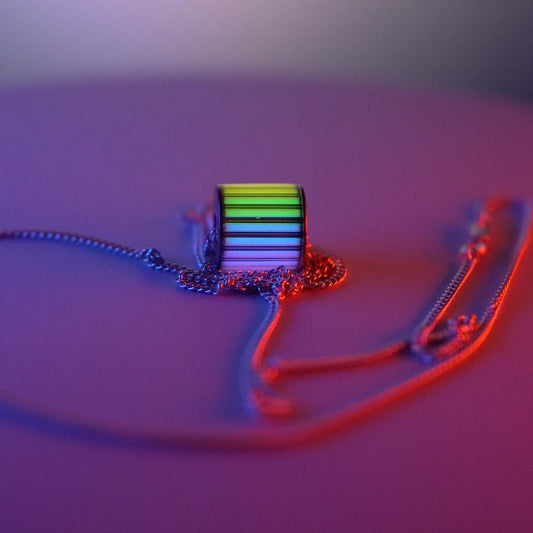
A necklace is often the most natural substitute because it stays close without occupying the hands. A simple chain with a small pendant can sit beneath a T-shirt most of the day and appear briefly at the collar when someone bends forward or takes off a jacket. That partial visibility gives it a different quality from a ring. It is private in one setting and noticeable in another.
The pendant does not need to be elaborate. A plain disc, narrow bar, small stone, or modest geometric form can carry the meaning without looking like a piece of ceremonial jewelry. Engraving is usually more convincing when it is hidden on the back or kept to a few letters rather than turned into a declaration. The chain matters as much as the pendant. A fine chain can disappear under clothing, while a heavier curb or wheat chain has enough surface and weight to feel intentional on its own.
Length changes the way the piece behaves. A chain that sits high near the base of the throat may catch on a shirt collar and feel too present for someone unused to necklaces. Something resting lower, near the sternum, tends to move quietly with the body. It may show when an overshirt is unbuttoned or when the wearer leans over, but it does not constantly ask for attention. A pendant that flips over every few minutes is unlikely to stay in rotation, no matter how meaningful it was on the day it was given.
Metal tone also changes the message. Yellow gold has warmth and becomes more visibly personal as its surface picks up fine scratches. Silver and white gold read cooler and often blend more easily with watches, belt hardware, and gray clothing. Blackened finishes can look compelling at first, but they tend to change unevenly where the pendant rubs against skin or fabric. That wear can be attractive, though it should be expected rather than treated as damage.
Bracelets offer a more visible alternative, especially for someone who already wears a watch. A narrow metal bracelet beside a watch can look considered without appearing arranged, but proportion is important. A wide, heavy bracelet may compete with the watch and make the wrist feel crowded by late afternoon. A slim chain, a low-profile cuff, or a bracelet made from a material with some give is easier to forget while typing, driving, or carrying groceries.
The clasp is where many bracelets reveal whether they were designed for real life. A closure that requires two hands and a calm morning is not ideal for something meant to be worn constantly. Secure lobster clasps, hinged cuffs, and well-made box clasps tend to work better than decorative closures that catch on sweater cuffs. A bracelet should also have a little movement. If it grips the wrist too closely, sweat collects beneath it and every small shift becomes noticeable. If it slides too far over the hand, it knocks against desks and doorframes.
Metal develops a visible record on the wrist. Polished surfaces pick up hairline marks quickly, especially where they meet a watch or a desk. Brushed finishes hide some of that wear but can become shiny along the edges over time. A textured silver bracelet may darken in its recesses while the raised areas brighten through contact. That kind of unevenness often gives the piece more character than a permanently untouched surface would have had.
There is also something appealing about a small signet or engraved pendant worn on a chain rather than on the hand. The form retains the language of a ring, with its flat face and concentrated symbolism, but it no longer creates the same interference with work or exercise. It can be handled, turned over, or tucked beneath a shirt without becoming an object everyone else has to interpret. For someone who dislikes jewelry that feels too exposed, that privacy may be the deciding factor.
Some men choose a watch as the meaningful object instead. It is not a direct visual replacement for a wedding band, but it already belongs to the routines of daily life. A watch is put on before leaving the house, removed at night, and noticed repeatedly throughout the day. A caseback engraving can remain almost entirely personal. The details people see instead are practical ones: whether the bracelet pinches, whether the clasp stays shut, whether the case is too thick under a shirt cuff, and how the metal gathers small scratches around the lugs.
That can make a watch feel less like a symbolic stand-in and more like a useful object that has absorbed significance. The distinction matters. A wedding ring alternative does not have to resemble a ring or announce the relationship in the same way. It can mark a habit, a promise, or a shared occasion through the fact that it is worn on ordinary days, including the unremarkable ones.
Materials should follow the life the piece will actually have. Gold is forgiving in color and easy to repair, but softer alloys show dents and surface marks. Platinum has a dense, cool weight and develops a soft patina rather than losing material as quickly through ordinary abrasion, though that weight is not comfortable for everyone. Titanium and stainless steel are light or durable in different ways, but they can feel more technical and less warm against the skin. Leather has an immediate softness, yet sweat, water, and repeated bending eventually become part of its appearance. A braided cord may be meaningful and comfortable, but it tends to look less formal and may need replacing.
The best alternative usually ends up being the object that fits an existing habit. Someone who touches his watch whenever he sits down may genuinely wear an engraved watch. Someone who keeps a chain under his shirt may find a pendant easier than a bracelet. Someone who never wears anything on his wrists will probably not become devoted to a bracelet simply because it has sentimental importance.
Meaning has a way of settling into the piece afterward. At first, the pendant or bracelet may feel conspicuous, as though its purpose is visible to everyone in the room. After enough mornings putting it on without thinking, the relationship changes. The surface gathers marks, the clasp becomes familiar to the fingers, and the object begins to belong to the body rather than the occasion that introduced it.