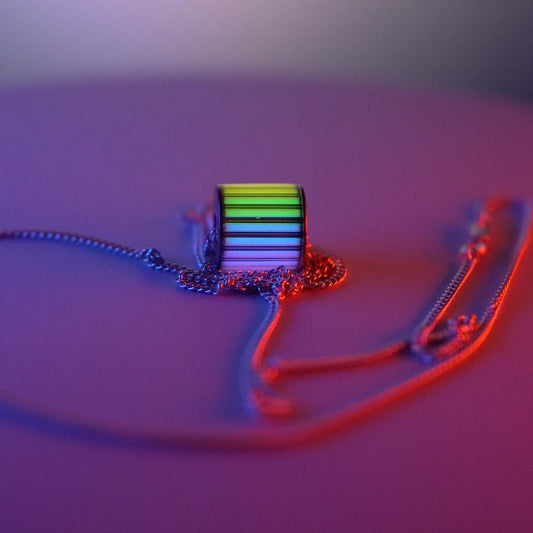
Choose a Nordstrom Rack Statement Necklace You’ll Actually Wear
Choose a Nordstrom Rack Statement Necklace You’ll Actually Wear
Many necklaces found through off-price shopping have an appealing tension between ornament and practicality. A broad gold-tone chain, a row of glass stones, or an irregular pendant can look considered without pretending to be fine jewelry. The metal finish is usually the first thing people notice. Bright polished gold reads differently from brushed brass or a darker antiqued surface, especially beside denim, black knitwear, or a white shirt. Some finishes have a pleasant softness from the beginning. Others look slightly too yellow until they are worn with warmer colors.
Scale is where these necklaces either become part of a person’s clothing or remain an experiment in the jewelry box. A large pendant can sit beautifully over a crewneck sweater, where the fabric gives it something to rest against. The same pendant may feel fussy over a thin blouse if the chain falls into the neckline or the piece keeps turning. I have found that necklaces with a little flexibility tend to be worn more often than rigid bib styles. They shift, but not so much that they need constant adjustment.
Weight has a similar effect. A necklace can feel substantial in the hand and still become tiring after a few hours. That is especially noticeable at dinner, when the pendant presses against the sternum as someone leans forward, or during a long workday when the chain pulls at the back of the neck. Lightweight materials are not automatically better. A hollow metal form or fabric-backed design may sit comfortably, while a thin, sharp-edged pendant can be irritating despite weighing very little. The clasp also deserves attention. A small spring ring hidden beneath a heavy focal piece can be awkward, and an extender that twists forward tends to make the necklace look less deliberate.
The most interesting designs usually have some surface variation. Faceted glass catches light in separate flashes instead of producing a flat sparkle. Hammered metal shows a scattered glow as the wearer moves. Resin, enamel, and faux stone can bring color without trying to imitate natural material too closely. I am more drawn to pieces that let their material character show. A cloudy green cabochon or a slightly uneven painted surface often feels easier to live with than a perfectly simulated gemstone whose only goal is shine.
There is also a social ease to a statement necklace that simpler jewelry does not always have. It can give an old dress a different posture without requiring a new outfit. It can make a plain sweater look intentional at a family gathering, though the wearer may eventually stop noticing it once conversation takes over. For a gift, that can be part of the appeal. A necklace is visible enough to feel special, but not as personally exacting as a ring or pair of earrings. Still, a gift only becomes meaningful if its scale matches the person. Someone who usually wears a fine chain may enjoy one large pendant for occasional use, while a layered, textured piece may feel more natural on someone already comfortable mixing jewelry.
Layering is possible, but it works best when the necklaces do not compete for the same space. A substantial pendant paired with a very fine chain can look relaxed if the shorter chain stays close to the neck and the larger piece falls clearly below it. Two elaborate necklaces tend to tangle visually before they tangle physically. Most days, a statement necklace works better with quiet earrings and an uncomplicated ring. The point is not to leave everything else bare, but to give the necklace enough room to be seen as part of an outfit rather than one item in a crowded arrangement.
Over time, plated surfaces may lose their evenness at the clasp, along the underside, or wherever the necklace rubs against skin and fabric. That is not always a flaw. A little change can make a piece feel lived in, though peeling finish or green discoloration is another matter entirely. Wiping away lotion and perspiration after wearing it helps, as does storing it flat instead of letting the chain knot around the pendant. Some necklaces stay in rotation because they become familiar in this way: not pristine, not precious, but easy to reach for when an outfit needs one definite note near the collarbone.