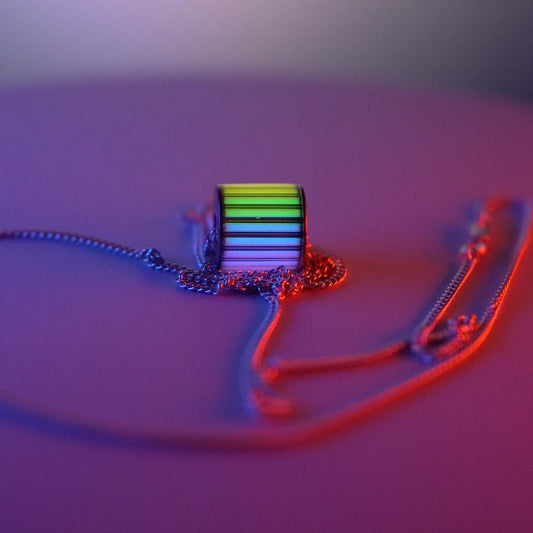
Length, Texture, and Finish: Shaping a Short Statement Necklace
Length, Texture, and Finish: Shaping a Short Statement Necklace
Length matters more than people expect. A short necklace that lands at the base of the neck can feel almost formal, especially with a high neckline, while one that rests just below the collarbone has a little more ease. The difference may be only an inch, but that inch determines whether the necklace sits on fabric, skin, or both. It also affects how often the piece shifts. A necklace that is too short can feel fixed in place and slightly tight when the wearer moves. One that is a little longer can settle into the shallow hollow above the sternum, where the pendant or central detail has room to move.
The word “statement” does not have to mean large. Sometimes it comes from a strong outline: a thick curved bar, a compact fan of polished links, or a dark stone framed in a plain setting. Other times it is the surface that holds attention. Brushed metal absorbs light and looks composed, while a high polish throws back bright, quick reflections. Hammered texture gives a piece a less perfect rhythm, with little dimples appearing and disappearing as the necklace moves. These details are especially visible in a short style because the eye encounters them at close range.
Materials become apparent in ordinary moments. Gold-tone plating can look warm and convincing at first, then show wear along the clasp or the edges of raised links where skin, hair, and clothing rub against it. Sterling silver may develop a softer, darker cast in its recessed areas, which can make texture more legible, though some people prefer the cleaner look of regular polishing. Glass or crystal elements often have a sharper, more uniform sparkle than natural stones. Natural stones bring variation instead: a cloudy patch, a line, a slightly different shade from one bead to the next. In a compact necklace, that irregularity can keep the piece from looking overly arranged.
Weight is part of the design, even when no one talks about it. A necklace with substantial links tends to stay put and has a satisfying drop when it is lifted from a jewelry tray. A lighter piece may be easier for all-day wear, but it can twist so the clasp works its way around to the front or the decorative section turns sideways. The clasp matters for the same reason. A small lobster clasp is dependable, though not always easy to operate with one hand. A spring ring can feel delicate. A toggle may be visually appealing but can loosen if the necklace is very short and under constant movement. These are not glamorous observations, but they decide whether a piece gets worn on a Tuesday morning or remains in its box.
Short statement necklaces also have a particular relationship with clothing. Against a plain crewneck, they can act almost like a drawn neckline, giving shape to an otherwise uninterrupted area of fabric. With a collared shirt, the necklace may sit under the collar or at its opening, and the result depends on whether the metal is crisp and graphic or soft and irregular. A bare neckline shows more of the necklace’s construction, including the chain, the spaces between stones, and the way it settles after the wearer has been moving around. A piece that looks perfectly centered in a photograph may drift slightly in real life. That is often part of its charm. Jewelry that never shifts can seem less alive.
Layering is possible, though a short statement necklace usually needs room around it. A thin chain above it can make the arrangement feel intentional, while another prominent necklace below may create visual congestion, especially with patterned clothing. I tend to notice the quieter combinations most: a compact sculptural piece near the collarbone with a barely visible chain disappearing beneath it. The necklaces do not match, but their different scales give each one a place.
There is also a reason these pieces stay appealing after louder styles have passed. They change the impression of familiar clothes without requiring a new wardrobe or a carefully assembled outfit. Someone can wear the same dark sweater for years and still alter its mood with a matte silver form one day, a warm metal piece the next. A necklace received for a birthday or worn at a graduation may later become part of that person’s regular rotation, not because it remains tied to the original occasion, but because its shape keeps proving useful.
Over time, the small signs of use become part of the necklace’s appearance. A polished edge loses some of its sharpness. The chain develops a preferred curve. The clasp no longer feels unfamiliar between the fingers. It begins to sit in the same place each time, near the collarbone, where it catches a little light during a conversation and then settles back against the shirt.