Opal Birthstone Guide: Why Its Colors Shift With Light and Motion
Opal Birthstone Guide: Why Its Colors Shift With Light and Motion
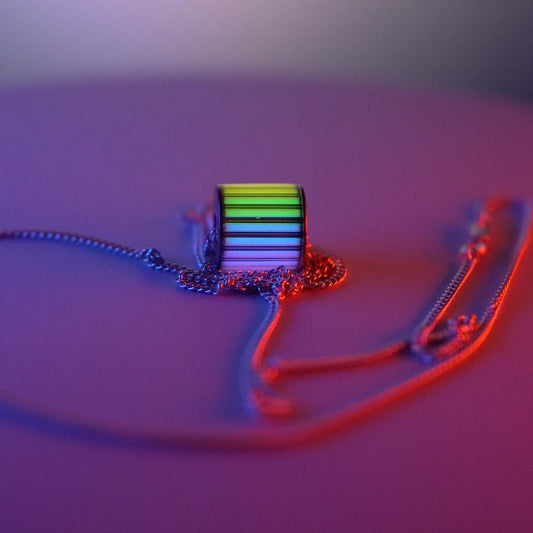
October is associated with both opal and tourmaline, but they offer very different kinds of color. Tourmaline tends to present its color with more steadiness. Opal is less predictable. A white opal in a slim gold pendant may show a small blue flicker near the collarbone, while the same stone can look milky and subdued under indoor lighting. A darker body-color opal, often called black opal, can hold brighter flashes against its background, but even then, the pattern depends on angle, light, and the cut of the stone.
That shifting quality gives opal a personal feeling without requiring elaborate symbolism. The stone does not look exactly the same in every photograph or across every season of wear. I have seen opal rings appear almost gray in a dim room and suddenly show vivid green when someone reaches for a glass or turns a key. The ordinary gesture does more for the stone than a carefully arranged display ever could.
Opal’s appeal also comes from its softer, less perfected appearance. Its play-of-color can look like a thin veil of oil on water, a small patch of stained glass, or light caught under ice. Some stones have broad bands of color, while others show tiny pinfire flecks scattered across the surface. There is no single “opal look,” which makes the birthstone adaptable to different kinds of jewelry. A small, pale cabochon can feel understated in a yellow gold ring. A larger stone with strong flashes may suit a more sculptural pendant, especially when the setting leaves enough of its curved surface visible.
The setting changes how the stone is experienced. Opal is usually polished as a cabochon rather than cut into sharp facets, so it has a rounded, almost tactile presence. In a ring, that dome catches light softly, but it also rises above the finger and can meet door handles, countertops, and pockets throughout the day. A bezel setting gives the edges more protection and creates a clean outline. Prongs can make the stone feel lighter and expose more of its surface, though they leave the edges more vulnerable to knocks. On an earring or pendant, where the stone is less likely to strike hard surfaces, its color can be enjoyed with fewer practical compromises.
This is not a birthstone that rewards complete carelessness. Opal is relatively soft, generally measuring around 5.5 to 6.5 on the Mohs scale, and its surface can acquire fine scratches with regular friction. A ring worn constantly may lose some of its crisp polish sooner than a sapphire ring would. That does not necessarily make it unsuitable for daily wear, but it does make the choice feel more deliberate. A low-profile setting, a protective bezel, and taking the ring off for heavy household work are sensible habits. Harsh chemicals, sudden temperature changes, and prolonged exposure to heat are best avoided, particularly with assembled stones such as doublets and triplets.
The distinction between solid opal and assembled opal matters mostly because it affects how the jewelry behaves over time. A doublet uses a thin layer of opal attached to another material, while a triplet adds a clear protective layer over the top. These constructions can make attractive jewelry and are common for practical reasons, but the edges and surfaces should not be treated like those of a hard, inert stone. A jeweler can usually explain what kind of opal is set in a piece, and that small bit of information often makes more difference than a dramatic description of its color.
Opal also has a long history of gathering meanings from different cultures, sometimes associated with hope, protection, luck, or emotional intensity. Those associations are not fixed rules, and the stone does not need a legend to justify its place in someone’s jewelry box. Its meaning often becomes more specific through use. An October birthday gift may begin as a simple connection to a birth month, then become the necklace worn to a first job interview or the ring kept after a major move. Because the color changes so noticeably, people often develop a particular way of looking for it. They learn which window brings out the blue, or which sweater makes the green disappear.
That makes opal a particularly observant kind of gift. It is less obvious than giving someone a red stone for January or a blue one for September. The recipient may need to spend time with it before its character becomes clear. A small opal pendant layered with a plain gold chain can rest near the collarbone without looking overly arranged. Opal studs may seem pale when the wearer is still, then show their color with a turn of the head. In a ring, the stone can sit quietly beside simpler bands and reveal itself during the small movements of the day.
I tend to think opal stays in rotation not because it matches everything, but because it refuses to look exactly the same twice. Its surface may show a little wear, and its color may be shy in certain light. Those qualities are part of the experience rather than flaws to be corrected. For an October birthday, that feels more interesting than a stone chosen only for dependable sparkle. An opal asks to be noticed in passing, usually when the wearer is doing something else.