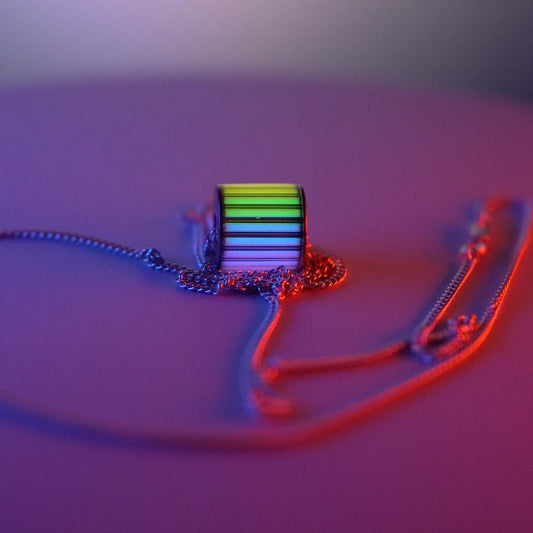
Unique BFF Necklaces That Feel Personal Without Looking Too Matching
Unique BFF Necklaces That Feel Personal Without Looking Too Matching
That restraint matters. Friendship jewelry can become awkward when the design depends too heavily on a message or a perfectly divided symbol. A necklace that says “best friends” in large letters may feel right for a particular moment, especially for younger wearers, but it often spends less time in the jewelry rotation. A smaller mark tends to last longer: two offset stars, a pair of uneven enamel shapes, a tiny lock and key, or pendants that share a texture without being identical. The wearer gets the private meaning without having to explain it every time someone notices.
The most convincing versions have a little visual tension between the two pieces. They might use the same brushed finish but different silhouettes, or repeat a colored stone in two settings. A pale blue glass cabochon in one necklace and a narrow blue enamel stripe in the other can feel more personal than two exact copies. Even a slight difference in scale helps. People are not identical, and their jewelry does not need to pretend they are.
Necklaces also have to work on the body, which is where many charming ideas lose their appeal. A pendant that looks substantial in a product photograph can sit heavily at the hollow of the throat, especially on a short chain. Edges that seemed playful at first may catch on knitwear or turn inward during the day. The piece should settle near the collarbone without constantly being pushed back into place. A chain with a smooth, dependable clasp is easy to overlook until a flimsy one opens over a sink or disappears beneath a sweater.
Length changes the whole mood. A necklace around sixteen inches sits close and feels more intimate, but it can compete with a crew neckline or stack awkwardly with another chain. Something a little longer falls lower on the chest and gives a small pendant room to move. Adjustable chain lengths are useful for friends with different proportions and different wardrobes. A person who mostly wears open shirts may like a pendant that drops into the V, while someone who lives in high-neck tops may prefer a shorter line that remains visible.
Metal finish has a stronger effect than many people expect. Bright polished silver catches light with every turn of the head and can look fresh against denim, white cotton, and darker colors. Gold-tone metal feels warmer, though the quality of the plating becomes obvious at the clasp and along the back of the pendant first. A matte or satin surface is less flashy and often easier to wear every day. It picks up a soft glow at the collarbone rather than throwing sharp reflections, and small scratches tend to blend into the texture instead of standing out.
Material character can make a shared necklace feel less disposable. Sterling silver develops a darker tone in the recessed parts of a textured pendant, giving the piece some depth as it is handled. Stainless steel keeps a more consistent surface and usually tolerates ordinary wear well, though it can feel cooler and more utilitarian. Enamel adds color without the unevenness of a natural stone, but its edges deserve attention. A pendant with a clean, well-set enamel surface feels finished; one with gaps or rough borders can look hurried.
Gemstones introduce another kind of individuality. Even small stones vary in cloudiness, veining, and shade, so two necklaces may coordinate without appearing factory-matched. That can be especially fitting for friends who share a history but have noticeably different personalities. A translucent stone may glow near a window, while an opaque one looks calmer under indoor light. The difference is easy to see when the necklaces are laid side by side, yet subtle once each person wears hers.
Gifting adds another layer. A BFF necklace is often given at a transition point: moving away for school, leaving a job, finishing a long season of life, or simply wanting to mark a friendship that has become part of the daily landscape. The design does not have to narrate that history. A small engraving on the back, a date hidden beneath a pendant, or an inside surface that only the wearer sees can carry more weight than a conspicuous declaration. There is something satisfying about jewelry that keeps its most personal detail turned toward the skin.
The necklace also has to coexist with the rest of someone’s jewelry. If one friend wears tiny gold hoops and a watch every day, a delicate gold pendant with a narrow chain will probably settle in naturally. Another person may favor oxidized silver rings, chunky bracelets, or mixed metals. Slightly irregular shapes and uncomplicated chains can bridge those differences. The pieces do not need to be styled as a set. They only need enough in common to be recognized as related when the connection matters.
Over time, the necklaces may stop looking exactly as they did on the day they were exchanged. The chain develops small bends from being taken off at night. The pendant picks up a soft scuff at one corner. One friend wears hers constantly, while the other saves hers for weekends or tucks it beneath a sweater. That unevenness is part of the appeal. Matching jewelry does not preserve a friendship in some ceremonial way. It simply becomes a small object that has shared a little time with both people, each necklace gathering its own evidence of being worn.