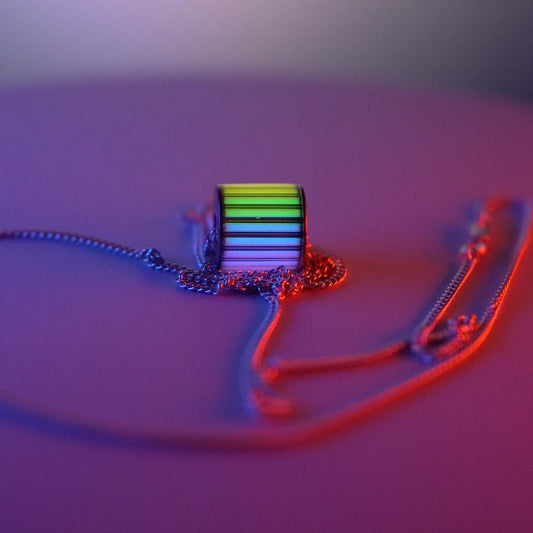
Unique Pendants Stand Out With Distinctive Shape, Movement, and Texture
Unique Pendants Stand Out With Distinctive Shape, Movement, and Texture
The most interesting pieces usually have a shape that reveals itself gradually. A flat oval of silver may look plain from across the room, but show a hammered surface when it catches afternoon light. A carved stone can seem almost dark until its wearer turns toward a window and a vein of green or brown appears inside it. A pendant with an irregular outline often works because the irregularity is quiet. It gives the eye somewhere to pause without making the necklace feel like a costume.
Scale matters more than people sometimes expect. A pendant can be unusual without being large. A small sculptural form resting at the collarbone may have more presence than a sizable, highly polished charm that swings too heavily. Weight changes the way a piece behaves. Heavier pendants tend to settle in one place, while light ones move with the body and may rotate, showing the back as often as the front. Neither is automatically better. The right movement depends on whether the piece is meant to be noticed as a fixed shape or discovered in fragments.
Metal finish has a lot to do with this. Brightly polished silver throws sharp flashes when someone moves, especially near a white shirt. Oxidized silver has a softer, more uneven depth, and its darker recesses make texture easier to read. Yellow gold warms against the skin, while a brushed or matte finish keeps it from looking overly formal. Over time, the high points of a textured pendant may become smoother from contact with clothing and fingertips. That change is usually more appealing than the idea of keeping the piece untouched. A pendant that develops a few fine scratches can begin to look connected to its owner rather than merely well maintained.
The bail and chain are easy to overlook until they are wrong. A pendant with a carefully considered front can feel disappointing if the loop is bulky, the chain kinks, or the clasp is awkward to operate. The chain also determines where the design lands. A short chain may place a pendant in the busy area just below the throat, while a longer one lets it rest over a plain shirt or a soft knit. Layering works best when the pieces do not all compete for the same inch of space. One pendant can sit near the collarbone, another lower on the chest, with enough difference in length that each one has room to move.
Some unique pendants are memorable because of their material rather than their outline. A piece made from a translucent stone can hold a little daylight, though its color may change from one room to the next. Wood has a warmer, quieter presence and can acquire a darker sheen where it meets skin. Enamel gives a pendant a clean field of color, but tiny chips along an edge may eventually appear if it is worn carelessly. Glass, shell, ceramic, and mixed metals each bring their own vulnerabilities. Those details matter in ordinary use. A pendant that snags on a scarf or swings heavily against a desk may spend more time in a jewelry box than around someone’s neck, no matter how striking it looked at first.
There is also a difference between unusual and personally specific. A pendant bought for its odd shape may become part of a daily uniform, while a modest piece received after a graduation, move, or family event can gather meaning through repetition. It may not be the most valuable object someone owns, but it becomes familiar in the same way a favorite watch or worn leather wallet does. The chain gets replaced. The finish softens. Someone eventually recognizes it before noticing the rest of the outfit.
Gifted pendants have their own small complications. A person’s taste is visible in how close they are willing to wear an object to the face and throat, which means a gift can feel surprisingly intimate. The safest choices are not necessarily the plainest. They are pieces with some character but enough openness for the recipient to decide what they mean. A dark stone, an abstract form, or a pendant with a handmade-looking surface can become part of a wardrobe without dictating it.
The pendants that stay in rotation tend to settle into a person’s gestures. They appear between the lapels of a jacket, tap lightly against a shirt button, or flash when the wearer turns to answer someone. After a while, their distinctiveness is no longer separate from the person wearing them. It becomes part of the way they are recognized.